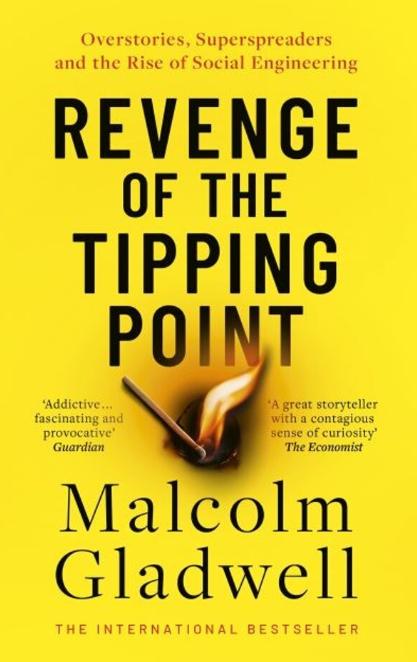
The Hidden Forces Behind Social Change: Lessons from Revenge of the Tipping Point
Malcolm Gladwell’s Revenge of the Tipping Point revisits one of his most famous ideas: that small changes can trigger massive transformations. But this time, the message is sharper—sometimes darker.
At its core, the book argues that society is not shaped evenly. Instead, it is driven by thresholds, hidden narratives, and highly influential individuals.
1. Why Uniform Systems Break
Gladwell uses the example of cheetahs to illustrate a critical point: genetic similarity creates vulnerability. Because cheetahs are so genetically alike, a single virus can devastate the entire population.
Human systems behave similarly. When environments become too uniform—whether culturally, socially, or intellectually—they lose resilience.
2. The Pressure of Perfection
In elite, achievement-focused communities, success can mask fragility. High-performing students often face intense pressure, leading to anxiety, burnout, and even clusters of extreme outcomes like suicide.
This reveals a paradox: success-driven environments can become psychologically unstable.
3. The Power of the 30% Threshold
One of the most striking ideas is the “critical mass” effect.
When representation reaches roughly 25–30%, a minority group stops being symbolic and begins to exert real influence. This applies across:
- Corporate leadership
- Social movements
- Community demographics
Below that threshold, individuals are isolated. Above it, they reshape norms.
4. Overstories: The Invisible Scripts
Overstories are the unconscious narratives that guide behavior.
They’re not laws—but they feel like truths.
Media plays a crucial role in shaping them. Shows like Will & Grace helped normalize previously marginalized identities, accelerating cultural change.
5. Engineering Epidemics
The opioid crisis demonstrates how tipping points can be deliberately created.
Pharmaceutical companies targeted key doctors—“superspreaders”—with repeated exposure and persuasive tactics. They found the tipping point was 24 pharmaceutical representative visits a year – some doctors were event receiving weekly visit.
There was noted to be variation in prescribing across States. This was thought to relate to strict opioid prescription tracking being mandatory in some States, in these Statesa third copy of the prescription was required a copy to be filed with the Bureau of Narcotic Enforcement. States that had this regulation in place had less drug deaths.
Small regulatory differences led to dramatically different outcomes.
This shows how policy and incentives can amplify or suppress large-scale problems.
6. The Superspreader Effect
Not all individuals are equal in influence.
A small number of people can:
- Spread diseases faster
- Accelerate trends
- Shift public opinion
The COVID-19 pandemic made this visible, but the same principle applies to ideas and behaviors.
Final Thought
The world isn’t chaotic—it’s patterned.
If you understand:
- thresholds
- narratives
- and key influencers
…you can predict—and even shape—major changes.